
Herringbone splashback tiles for a kitchen: which herringbone, which way and how many you need
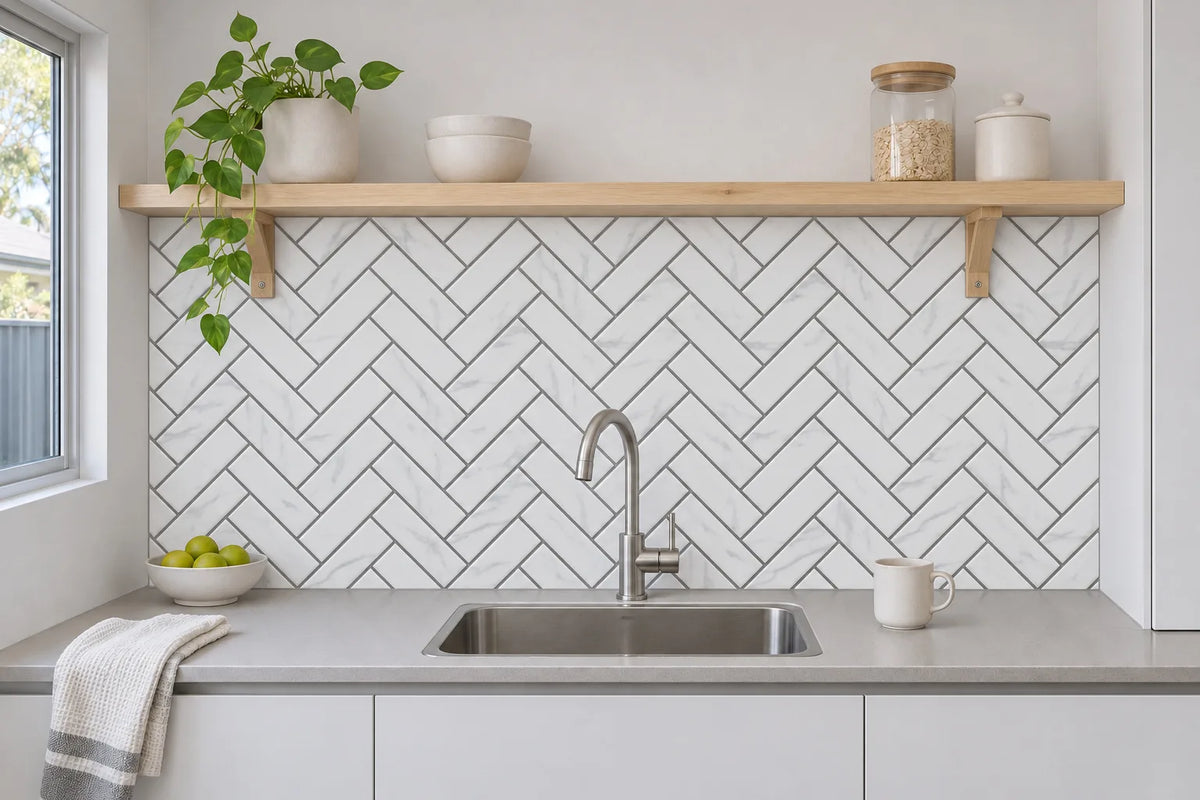
Short answer: for a herringbone splashback in a kitchen there are three ready-made herringbone mosaics here. Carrara Herringbone is a matt ceramic with a Carrara-style grey vein, Carrara Petite Herringbone is polished natural marble in a smaller 30 × 60 mm chip, and Studio White Herringbone is a plain white gloss ceramic. Pick by finish and colour first, then decide which way the pattern points. A typical 3 m × 600 mm splashback needs about 21 sheets of Carrara Herringbone or Studio White Herringbone, or about 26 sheets of Carrara Petite Herringbone, before any allowance for cuts.
1. The three herringbone mosaics
| Mosaic | Material and finish | Piece | Sheet and coverage |
|---|---|---|---|
| Carrara Herringbone | Ceramic, matt | 21.5 × 71.5 mm | 316 × 277 mm, 0.0875 m², 6 mm |
| Carrara Petite Herringbone | Natural marble, polished | 30 × 60 mm | 270 × 262 mm, 0.0707 m², 8 mm |
| Studio White Herringbone | Ceramic, gloss | 21.5 × 71.5 mm | 316 × 277 mm, 0.0875 m², 6 mm |
All three are sold by the sheet and are in herringbone mosaic tiles and kitchen splashback tiles. Whether to buy a ready-made herringbone or lay loose tiles in the pattern is a separate question, covered in Herringbone tiles: three ready-made sheets, or lay it yourself; this guide is about a kitchen splashback. For a plainer splashback in rectangular tiles, see subway tile ideas for a kitchen.
2. Matt, polished or gloss
- Carrara Herringbone, matt ceramic: the Carrara grey vein without shine. Under a rangehood light or beside a window it reads soft and even, and the pattern shows through the vein rather than through reflections.
- Carrara Petite Herringbone, polished natural marble: each small chip catches the light, so the wall sparkles slightly and the veining varies from piece to piece, as natural stone does. The smaller chip gives a finer pattern. Is Carrara marble? explains why some Carrara names here are marble and some are not.
- Studio White Herringbone, gloss ceramic: a plain bright white, so the herringbone pattern and the grout lines are the whole look.
Set a sample of each against your benchtop and cabinet colour in the kitchen's light. The difference between matt, polished and gloss is easier to judge in person than on screen.

3. Which way the pattern runs
A herringbone mosaic can be fixed with the zigzag pointing up the wall, so the V shapes stack vertically, or turned so the zigzag runs along the splashback. Pointing up makes a low splashback look taller; running along it follows the line of the benchtop and the cabinets. The pattern is fixed on the mesh, so the choice is just how each piece of mesh is turned, and it should be the same across the whole wall. Agree it with your tiler before they start, and look at Subway tile layouts for how herringbone compares with other patterns.
4. Grout and edges
A herringbone has many short joints, so the grout colour shapes the pattern. A white or pale grey grout keeps the wall soft and lets the vein show; a mid grey draws the zigzag more clearly. Choose from a dried sample joint, as Grout colour: why a dried sample joint beats the chart explains. At the benchtop, the window and the cabinet sides the zigzag is cut straight, so look at where those edges fall; how they are finished is for your tiler to plan.

5. How many to order
Divide the splashback area by the coverage of one sheet and round up. As an assumed example, a splashback 3 m long and 600 mm high is 1.8 m²:
| Mosaic | Coverage per sheet | 1.8 m² before allowance |
|---|---|---|
| Carrara Herringbone | 0.0875 m² | 21 sheets |
| Studio White Herringbone | 0.0875 m² | 21 sheets |
| Carrara Petite Herringbone | 0.0707 m² | 26 sheets |
Add the allowance your tiler asks for; ask about it before ordering, because the zigzag is cut at every edge. The tile calculator works it out for your own measurements.
Mosaic sheets are not counted in the delivery weight, so an order of mosaic sheets on its own goes at the first delivery band: A$35 to Greater Melbourne, A$60 to the Geelong area and A$70 to the rest of Victoria. Other states are on the delivery page.
Questions people ask
What is the best herringbone tile for a kitchen splashback?
It depends on the look: matt Carrara Herringbone for a soft grey vein, polished natural marble Carrara Petite Herringbone for a finer, light-catching pattern, or white gloss Studio White Herringbone for a plain bright wall.
Should a herringbone splashback point up or run sideways?
Pointing up makes a low splashback look taller; running sideways follows the benchtop and cabinets. Keep the same direction across the whole wall and agree it with your tiler.
How many herringbone mosaic sheets do I need for a splashback?
Divide the area by the sheet coverage. A 3 m × 600 mm splashback is 1.8 m²: about 21 Carrara Herringbone or Studio White Herringbone sheets, or 26 Carrara Petite Herringbone sheets, before any allowance.
Is Carrara Petite Herringbone real marble?
Yes. Its product page records natural marble with a polished finish. Carrara Herringbone is a ceramic with a Carrara-style look.
What grout goes with a herringbone splashback?
White or pale grey keeps the wall soft; mid grey draws the zigzag more clearly. Decide from a dried sample joint on your own tile.
Where these facts come from
Material, finish, piece size, sheet size, thickness and sheet coverage come from the three herringbone product pages, read on 17 November 2026. Sheet counts are worked from the stated coverage. Delivery rates and the note on mosaic weight are from the delivery page on the same date. The splashback is an assumed example. This guide is about choosing and appearance; how the mosaic is installed and finished at the edges is for your tiler to confirm.
Search with Google? Add Tilekind as a preferred source and Google is more likely to show our guides in your Top stories.


